Calm Bedtime Routine Chart for Kids 4‑8 (Free Printable)
Short answer: A good bedtime routine for a 4 to 8 year old is the same few calm steps in the same order every night, about 30 minutes long: wash up, pajamas, potty, brush teeth, a story, then a hug and lights out. Turn off screens at least an hour before bed. A picture chart lets children who can't read yet follow the steps on their own.
Free download, no sign-up: the calm bedtime routine chart (PDF, 4 pages). It prints on US Letter paper. Inside:
- My calm bedtime: 7 picture steps with a check box for each night of the week.
- My short-night bedtime: 4 steps for late nights, in the same order.
- Make your own chart: blank circles to draw in, so your child can build their own.
- Worry jar slips: for children who bring big worries to bed, plus a short goodnight script for grown-ups.
Why a routine helps
In a large study of more than 10,000 young children, the more nights a week a family kept a bedtime routine, the better children slept, as parents reported it. The American Academy of Pediatrics (AAP) suggests a short, predictable routine, summed up as “brush, book, bed”.
A routine works because children know what comes next. There’s less to argue about when the chart, not the parent, says it’s time for teeth.
1. Set the bedtime from the wake-up time
Sleep experts (the American Academy of Sleep Medicine, with the AAP’s support) recommend:
| Age | Sleep in 24 hours |
|---|---|
| 3 to 5 years | 10 to 13 hours, naps included |
| 6 to 12 years | 9 to 12 hours |
Count back from the time your child has to wake up. A 5-year-old who wakes at 6:30 am and needs about 11 hours would be asleep by 7:30 pm, so the routine starts around 7:00. Keep weekend wake-ups within about an hour of school days.
2. Keep it to about 30 minutes
The AAP suggests keeping the bedtime routine to no longer than 30 minutes. A bath makes it a little longer. On busy nights, use the short-night chart: the same order, just fewer steps.
3. Use the same steps in the same order
Our chart uses the steps most families use:
- Bath or wash up
- Pajamas on
- Potty and a sip of water
- Brush teeth
- Story time
- Worry jar and 3 slow breaths
- Hug, nightlight, sleep
Swap in your own steps on the blank chart. What matters most is keeping the same order every night.
4. Screens off an hour before bed
The AAP recommends turning off screens at least one hour before bedtime and keeping them out of the bedroom. Quiet music or an audio story is a calm alternative in bed. If your child likes our calm story videos with Sean and Mip, watch them earlier in the evening, before the routine starts.
5. Let your child help make the chart
Children are more likely to follow a chart they helped make. Let them color the pictures, choose where it hangs, or draw their own steps on the blank page. Put it at their eye level, by the bathroom or bedroom door.
6. Stop the stalling before it starts
- Give a 10-minute and a 5-minute warning before the routine begins.
- Build the usual requests into the routine: a sip of water, the potty and a comfort toy all come before lights out.
- Set limits ahead of time, like “two books and one song”, and stick to them kindly.
- Praise the steps your child does on their own. Some families add a small sticker for each night the chart is finished.
7. When worries come out at bedtime
Bedtime is quiet, so it’s often when big worries show up. A few gentle ideas:
- Worry time earlier in the evening. Some pediatric teams suggest a short, set time before the routine to talk about worries. Your child can draw or write a worry on a slip and put it in a jar, to look at together tomorrow.
- A short, calm goodnight. “You’re safe. Your worry is in the jar, and we’ll look at it together tomorrow.” Then say goodnight.
- Slow breaths. Breathing in through the nose and out “like blowing out a candle” gives your child something to do with a fluttery tummy.
- A nightlight or a comfort toy if the dark feels big.
Brave can be small. A child who stays in bed a little longer this week than last week is making progress.
When to talk to your pediatrician
Talk to your child’s doctor if you notice:
- loud snoring on most nights, pauses in breathing, or gasping during sleep;
- being very sleepy or cranky during the day even after enough hours in bed;
- night terrors or night waking that keep disrupting sleep;
- worries that keep your child awake most nights, get worse, or come with stomachaches or trouble during the day.
This guide shares general information for families and isn’t medical advice.
Free gift
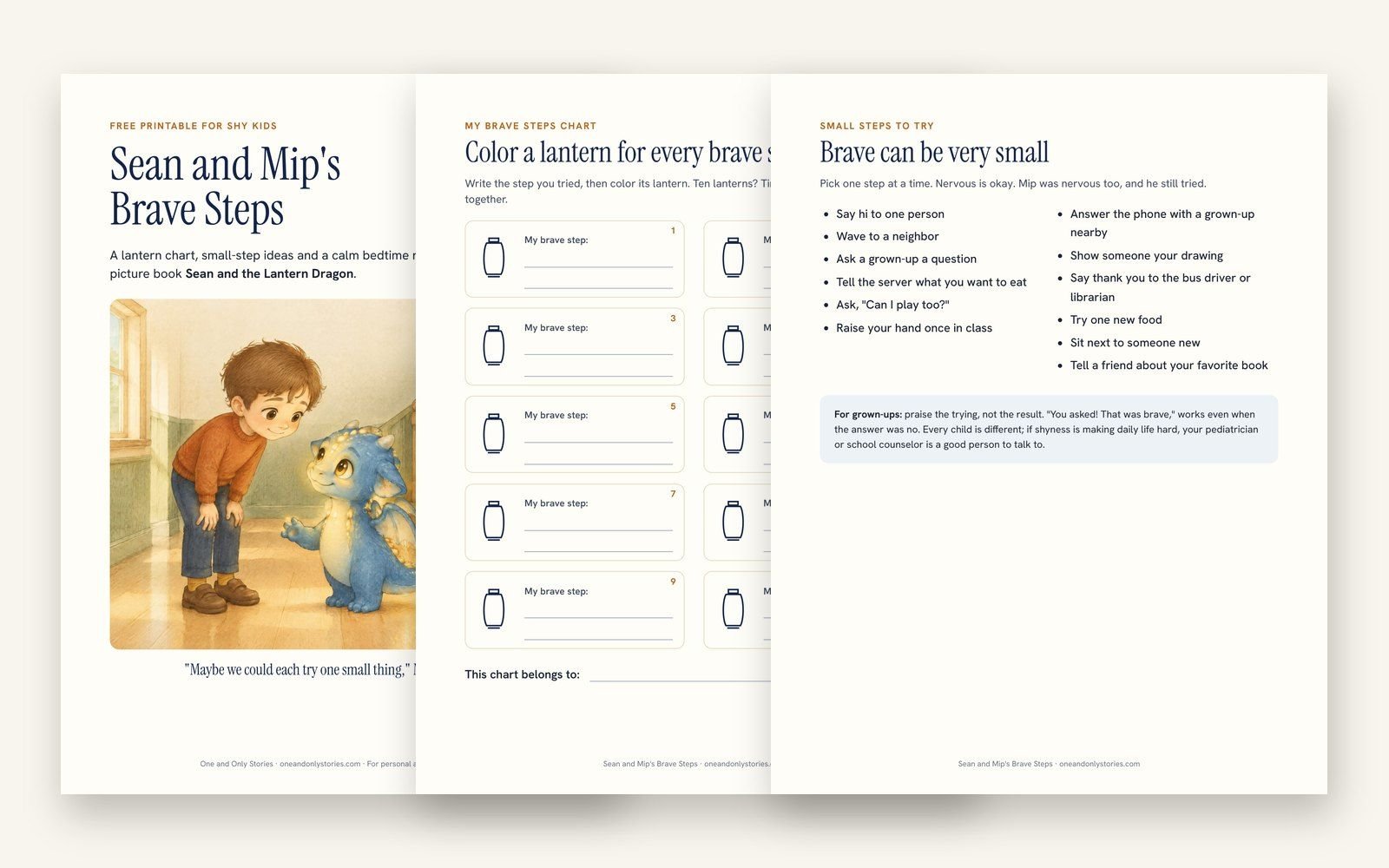
Free: Brave Steps pages with Sean and Mip
A brave steps chart, small-step ideas and a calm bedtime routine, for quiet kids ages 4 to 8 with big worries. Brave can be small.